Saving the Good Stuff
There comes a point when you realize you’ve been saving the good stuff for a version of yourself who never arrives.
The nice notebook for a version of you who has words worthy of marring its pages.
The beautiful fabric you aren’t “good enough” to cut yet.
The good dishes,
The expensive art supplies.
The life you’ll begin once you finally feel ready.
I’ve done enough waiting.
For years I kept trying to find work that fit the way my mind works. Work I could be proud of. Work that didn’t leave me lying awake at night dreading the next morning, or feeling as though I was participating in things that went against my values.
Every job seemed to ask me to become a little less myself in exchange for a paycheck. And they all seemed to have me helping someone who already had plenty of money to have even more while I struggled to stay exhausted and broke.
Eventually I realized I was asking the wrong question.
Not, What job can I get?
But, What job can I build?
Not a fantasy.
Not a shortcut.
A real job.
One where I spend my days writing, making things, growing things, teaching what I know, and sharing whatever I discover along the way.
A job that lets me sleep at night.
Maybe that’s why I find myself thinking about the old trades.
Once upon a time, knowing a trade was enough to earn a living. If you knew how to make shoes, you became a cobbler. If you could alter clothing, you became a tailor. If you built furniture, you were a cabinetmaker. There were tinsmiths, coopers, wheelwrights, milliners, watchmakers, bookbinders, basket weavers. Ordinary people who knew how to do one thing well enough that their communities needed them.
Mass production changed that.
It made life easier in countless ways. It gave us abundance our great-grandparents could hardly have imagined. But it also quietly changed our relationship with work.
When a pair of shoes became cheaper to replace than to repair, we stopped needing cobblers.
When shirts became inexpensive enough to throw away, we stopped needing tailors.
Flat-packed furniture replaced many cabinetmakers.
Little by little, many of the old trades stopped being practical ways to make a living.
My grandfather came home from the Army, and it never even crossed his mind to work for someone else. He knew how to build something people needed, so he built a business around it. That was simply what you did.
Somewhere along the way, many of us stopped believing we could do that.
We learned to write résumés instead of apprenticeships.
To look for openings instead of opportunities.
To wait for someone else to decide whether what we knew had value.
But I wonder if we’re standing at another turning point.
For the first time in generations, one person can write a book, teach a class, make beautiful things, share photographs, record ideas, and find the people who care about them without asking anyone’s permission to open the doors.
Not everyone wants that life.
I do.
Persnickety Hills is my attempt to build it.
This isn’t just a website. It’s the workshop, the library, the garden, the classroom, and the front porch of a job I’m creating with my own hands.
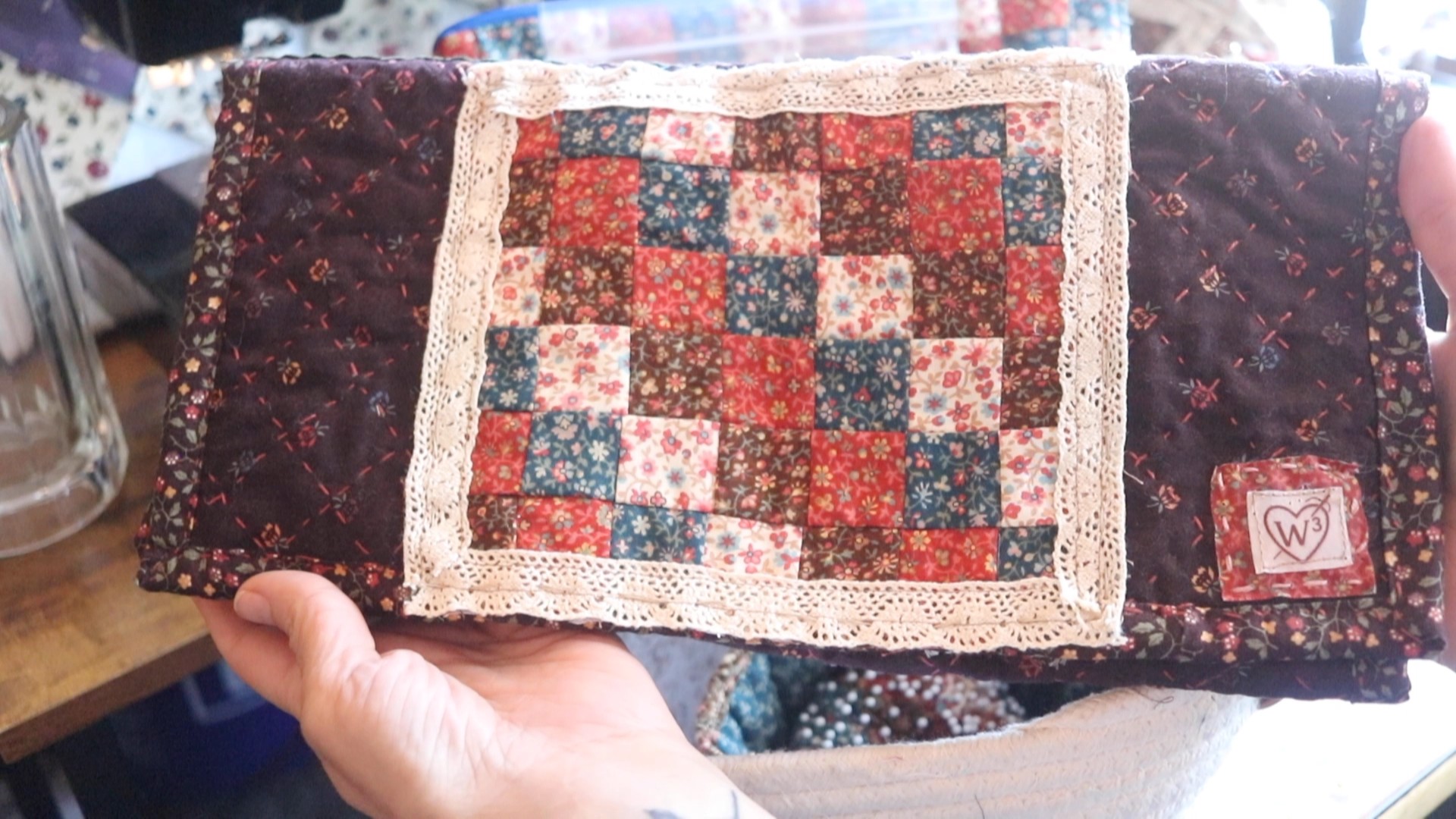
Maybe that’s why I finally cut into the good fabric.
Why I finally wrote in the good notebook.
Because I realized something.
The version of me I’d been waiting for was never going to arrive first.
She only ever had one chance.
She had to be made.
